
Technical capability

2D and 3D rendering

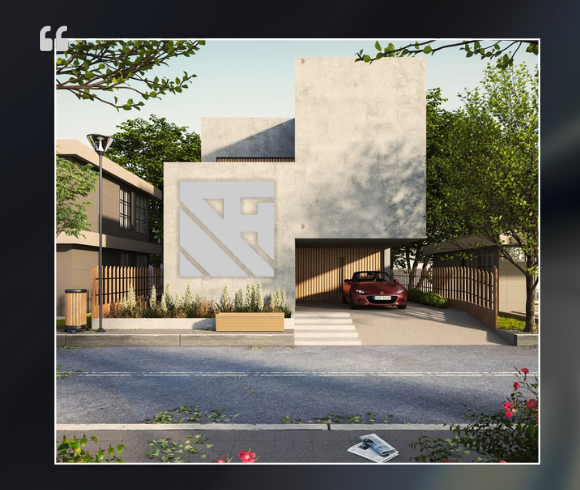
Photorealistic visualizations for products, spaces, architecture and industrial environments, delivered in formats optimized for web, print and presentations to end clients.

2D/3D architectural rendering
Specimen 012D/3D architectural rendering
Typology
Visual production
Engagement
Brief + production + iterations
Format
Per project or ongoing engagement
Horizon
1–4 weeks · per scene

Who this capability is for.

Real-estate developers who need pre-construction visualizations for residential and commercial projects. Product manufacturers who need realistic shots before physical photography. Architecture studios that outsource visual production for investor presentations or to win tenders.

How we work, in practice.

We start from the technical spec (plans, CAD models, material samples) and the agreed visual moodboard. We model in 3D in Blender or 3ds Max, texture with physically correct materials, light with realistic sources. A final render with ray tracing and post-processing in Photoshop or DaVinci. Iterations based on structured feedback, not on “warmer, colder”.

Technologies used in production.

  1. 01Blender 4 · modeling & render
  2. 023ds Max + V-Ray · complex architectural projects
  3. 03Substance Painter · PBR texturing
  4. 04Photoshop · post-processing
  5. 05DaVinci Resolve · animation
  6. 06Unreal Engine 5 · virtual tours (optional)

What the client gets at the end.

  1. D.01Final images

    PNG or JPG at print resolution (300 dpi) and web, with aspect-ratio variations.

  2. D.02Variations

    Day / night, season, material or finish options, delivered as complete sets.

  3. D.03Animation (optional)

    A final MP4 + individual frames, for further editing by the client.

  4. D.04Source files

    Blender / Max project files handed over on request, for continuity with other vendors.

Questions that come up often.

  1. Q.01Do you work only on architecture?

    No. We also cover product (electronics, furniture, packaging), industrial (machines, equipment, production lines) and environment (commercial interiors, public spaces, exhibitions).

  2. Q.02How photorealistic are the renders?

    Indistinguishable from photography for most cases. For very sensitive projects (product advertising, jury presentations) we run comparison tests against real photography before accepting the project.

  3. Q.03How many iterations are included?

    Typically 2 rounds of structured feedback are part of a project's standard scope. Additional iterations are agreed separately. A detailed brief at the start drastically reduces the number of iterations needed.

Have a requirement in this area?

We start with a technical discussion led by a principal engineer, under a confidentiality agreement.